
Understand the duty to prevent sexual harassment
From 26 October 2024, employers in England, Scotland and Wales had to take reasonable steps to prevent sexual harassment of their workers. Since 30 October 2026, the standard has been all reasonable steps, and employers are liable for harassment of their workers by customers, clients and other third parties unless they took all reasonable steps to prevent it.
How common it is
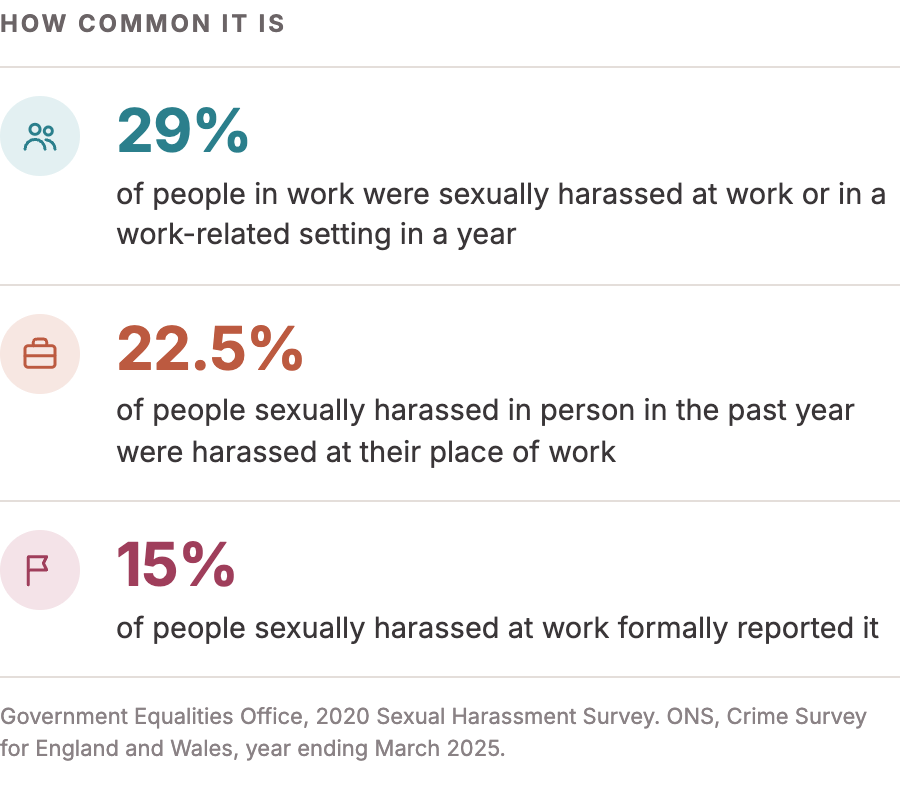
In the Government Equalities Office's 2020 Sexual Harassment Survey, 29 per cent of people in work had been sexually harassed at work or in a work-related setting in the previous year. Only 15 per cent of people sexually harassed at work formally reported it.
In the ONS Crime Survey for England and Wales, year ending March 2025, 22.5 per cent of people sexually harassed in person in the past year were harassed at their place of work.
Who it applies to
The duty applies to every employer in England, Scotland and Wales, whatever its size. Northern Ireland has its own equality law and no equivalent duty.
Key dates
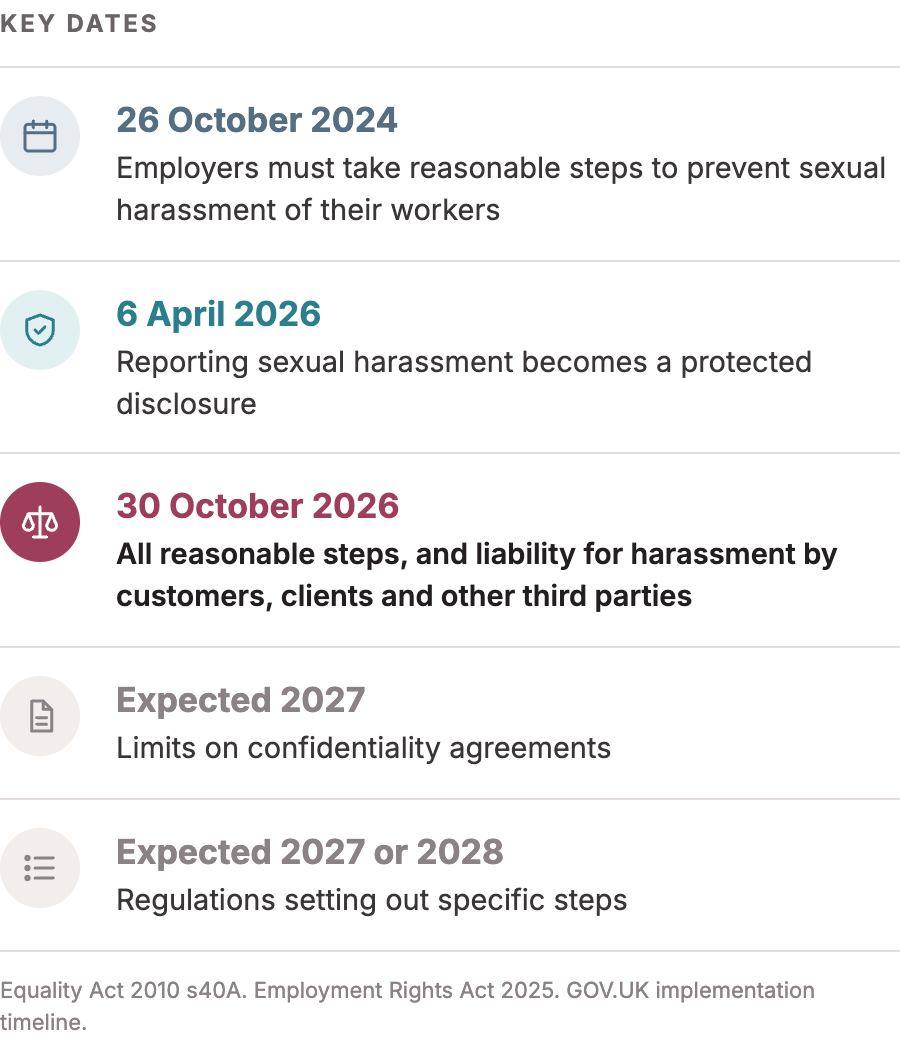
26 October 2024. Employers had to take reasonable steps to prevent sexual harassment of their workers (Equality Act 2010, section 40A).
6 April 2026. Reporting sexual harassment became a protected disclosure.
30 October 2026. All reasonable steps, and liability for harassment by customers, clients and other third parties (Employment Rights Act 2025).
Expected 2027. Limits on confidentiality agreements.
Expected 2027 or 2028. Regulations setting out specific steps.
Source: GOV.UK implementation timeline for the Employment Rights Act 2025.
Harassment by customers and clients
Since 30 October 2026, employers must take all reasonable steps to prevent their workers being harassed by customers, clients, patients and other third parties, as they already must for harassment between colleagues. This covers sexual harassment and harassment related to seven protected characteristics: age, disability, gender reassignment, race, religion or belief, sex and sexual orientation. Pregnancy and maternity, and marriage and civil partnership, are not covered.
For hospitality, retail, health, education and any workforce that deals with the public, this is the change your people will notice first.
What all reasonable steps looks like
The law sets the standard and leaves each employer to decide what meets it. Whether you’ve met it is judged objectively: what counts is what an employment tribunal decides was reasonable for an organisation of your size, sector and risk, not what you or your workers think. Regulations setting out specific steps aren’t expected before 2027.
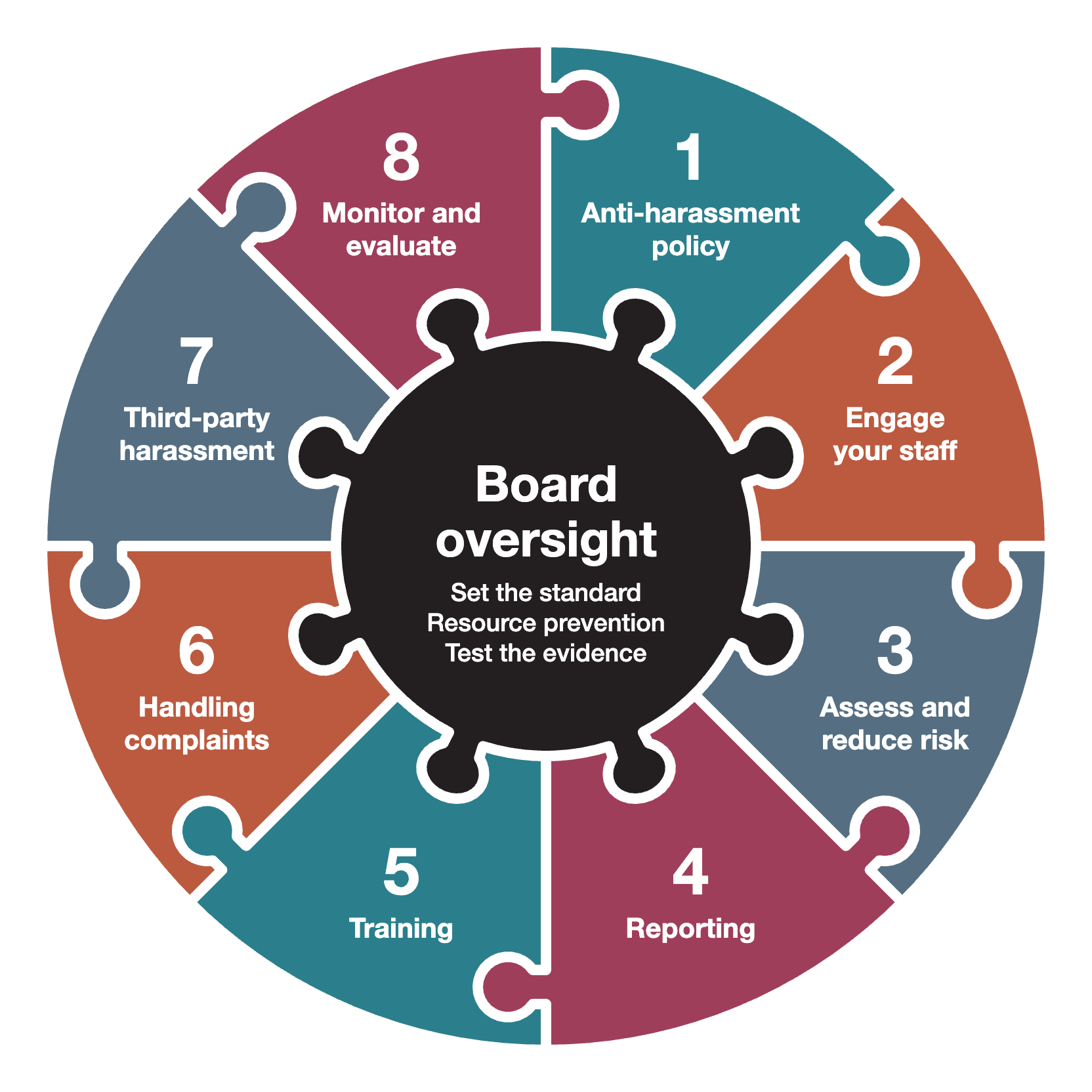
Until then, the Equality and Human Rights Commission’s technical guidance is the benchmark tribunals are likely to use. The Commission updated it on 30 October 2026, along with its 8-step guide for employers. The eight areas are:
A clear policy. Say what sexual harassment is, how to report it and what happens next, and make sure people have read it.
Engaging your people. Ask workers where and when they feel unsafe, through surveys, exit interviews and staff networks.
Assessing and reducing risk. Identify the conditions that make harassment more likely, such as lone or late work, alcohol at work events, power imbalances and contact with the public, then change them.
Reporting pathways that work. Offer more than one way to report, so no one has to go through the person harassing them, and tell people what happened with their report.
Training for every role. Behaviour-based training that builds the skills to recognise harassment, step in and respond to a disclosure, refreshed regularly.
Handling complaints well. Investigate promptly and fairly, protect the person who reported, and act on what you find.
Preventing harassment by third parties. Set expectations for customers and clients, give staff a way to end an interaction, and back them when they do.
Checking it’s working. Track reports, survey results and outcomes, and change what isn’t working.
The Commission is clear that “all” doesn’t mean planning for extremely unlikely situations or removing every risk. It does mean you can’t stop at the steps that are easy. If a step was reasonable and you didn’t take it, you haven’t met the duty.
Board oversight connects the eight. The Board sets the standard, resources prevention and tests whether each step is working, which is why our series starts with the Board. Our tools turn each area into practical steps, drawing on what we learned helping Australian organisations meet their positive duty since 2022.
Read the EHRC technical guidance →
Read our guide: What counts as all reasonable steps? →
What happens if an employer falls short
If a worker wins a sexual harassment claim and the tribunal finds the employer breached the duty, it can increase their compensation by up to 25 per cent (Equality Act 2010, section 124A). The duty applies whether or not anyone has complained, and the Equality and Human Rights Commission can enforce it directly, including through investigations and unlawful act notices.
Harassment by customers and clients works differently. Since 30 October 2026, a worker can bring a claim against their employer for harassment by a third party, related to any relevant protected characteristic, if the employer didn’t take all reasonable steps to prevent it. It doesn’t have to have happened before.
Workers also have longer to bring a claim. For anything that happens on or after 1 October 2026, the time limit for most employment tribunal claims is six months, up from three.
Learning from the Australian experience
Australia’s positive duty began in December 2022, and its regulator gained enforcement powers a year later. The organisations that met it well put prevention on the Board agenda early, fixed the conditions that made harassment more likely, and gave their leaders the skills to step in, including with customers. Our UK courses and tools are built around those three.
Questions employers ask
What is the duty to prevent sexual harassment?
Employers in England, Scotland and Wales must take all reasonable steps to prevent sexual harassment of their workers in the course of their employment. It’s in section 40A of the Equality Act 2010, and the Employment Rights Act 2025 raised the standard to “all reasonable steps” from 30 October 2026.
Does it apply to small employers?
Yes, to every employer whatever its size. What’s reasonable for a 15-person business differs from a national retailer, but no employer is exempt.
Does it cover harassment by customers and clients?
Yes. Employers must take all reasonable steps to prevent workers being harassed by customers, clients, patients, contractors and other third parties. This covers harassment related to any relevant protected characteristic, not only sexual harassment.
Is training enough?
No. Most employers will need training, but the Commission expects it alongside a risk assessment, a clear policy, reporting pathways that work and regular checks on whether prevention is working.
What happens if we don’t comply?
A tribunal can increase compensation by up to 25 per cent in a successful sexual harassment claim where the employer breached the duty. The Commission can also investigate and take enforcement action, even if no one has complained.
How long do workers have to bring a claim?
Six months for most employment tribunal claims about anything that happens on or after 1 October 2026, up from three.
Does the duty apply in Northern Ireland?
No. Northern Ireland has its own equality law and no equivalent duty.
What can UK employers learn from Australia?
Australia has had a positive duty since December 2022. The organisations that met it well put prevention on the Board agenda early, fixed the conditions that made harassment more likely, and gave leaders the skills to step in, including with customers.
General information. It is not legal advice. Sources: GOV.UK implementation timeline for the Employment Rights Act 2025, and the Equality and Human Rights Commission’s technical guidance and 8-step guide for employers, both updated 30 October 2026.