Conversation cards
Two decks of 52 cards that help leaders talk with their teams about how work feels, what gets said and done, and what needs to change. Each card asks one question and gives follow-up prompts to take the conversation further.
Use them in one-to-ones, in team meetings, or on your own to reflect on how you lead. Most conversations take ten to fifteen minutes. They work best as a regular habit, so that small concerns come up early, while they are still easy to fix.
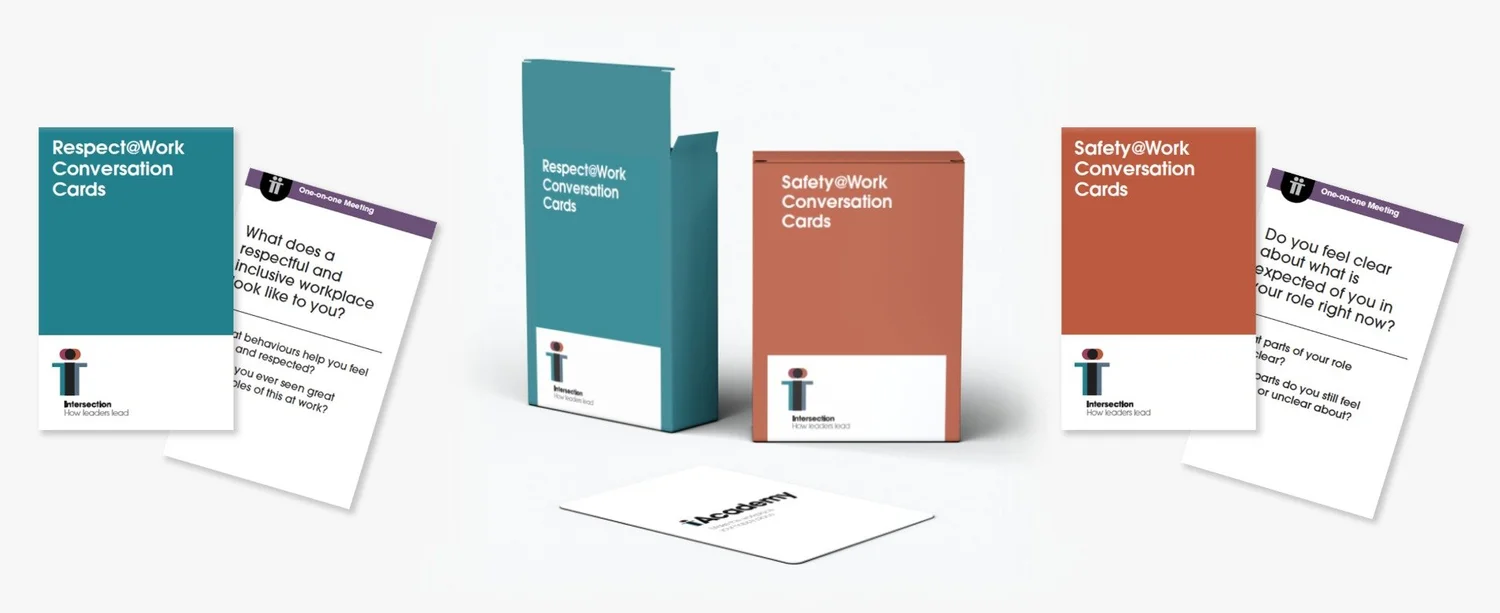
Respect@Work cards
Safety, respect and inclusion at work. This deck helps leaders set clear expectations about behaviour and build a team where people feel included and able to speak up. It covers sexual harassment, harassment related to sex, a hostile or degrading working environment, victimisation, and the everyday conduct that lets these take hold.
From 30 October 2026, employers in England, Scotland and Wales must take all reasonable steps to prevent sexual harassment of their workers, including harassment by customers, clients and other third parties. The Equality and Human Rights Commission expects employers to engage with their people about the risks and to check that prevention measures work. Regular conversations led by managers are one of the clearest ways to do both, and the cards give managers a structure to have them well.
The deck takes its name from the Australian Respect@Work Inquiry, which led to Australia's positive duty to prevent sexual harassment in 2022.
Safety@Work cards
The conditions of work and psychological safety. This deck helps leaders talk about the parts of work that affect people's mental health: workload, how much control people have, the support they get, relationships at work, clarity about their role, and how change is handled. It also covers bullying and harassment, and whether people feel safe to raise a concern or admit a mistake.
Under the Health and Safety at Work etc. Act 1974 and the Management of Health and Safety at Work Regulations 1999, employers must assess risks to their workers' health, and that includes work-related stress and mental health. The Health and Safety Executive's Management Standards set out six areas of work that drive these risks: demands, control, support, relationships, role and change. These are known internationally as psychosocial hazards, the term used in ISO 45003 and in Australian law. The cards follow the same areas, so the conversations feed directly into your risk assessment.
Who they are for
- People leaders and managers at every level
- Executive teams who want to model the conversations they expect
- HR, health and safety, and culture teams running team sessions
What they help you do
- Spot risks to respect, safety and wellbeing early
- Show what you have done to engage your people, as evidence for the duty to prevent and your risk assessment
- Build shared responsibility for how the team works
- Give managers words for conversations they often avoid
Prices
| Option | One deck | Both decks |
|---|---|---|
| Printed boxed deck, each | £39 | £69 |
| Printed boxed decks, 10 or more of the same deck, each | £32 | £57 |
| Online access for your organisation, 12 months | £145 | £245 |
Prices are in pounds and exclude VAT. Printed decks: add £20 postage per order to a UK address. Online access lets everyone in your organisation use the cards on screen and in video calls.
Buy the Respect@Work deck, £39 →Buy the Safety@Work deck, £39 →Buy both decks, £69 →
For 10 or more decks, or online access for your organisation, talk to us.
Who is most at risk
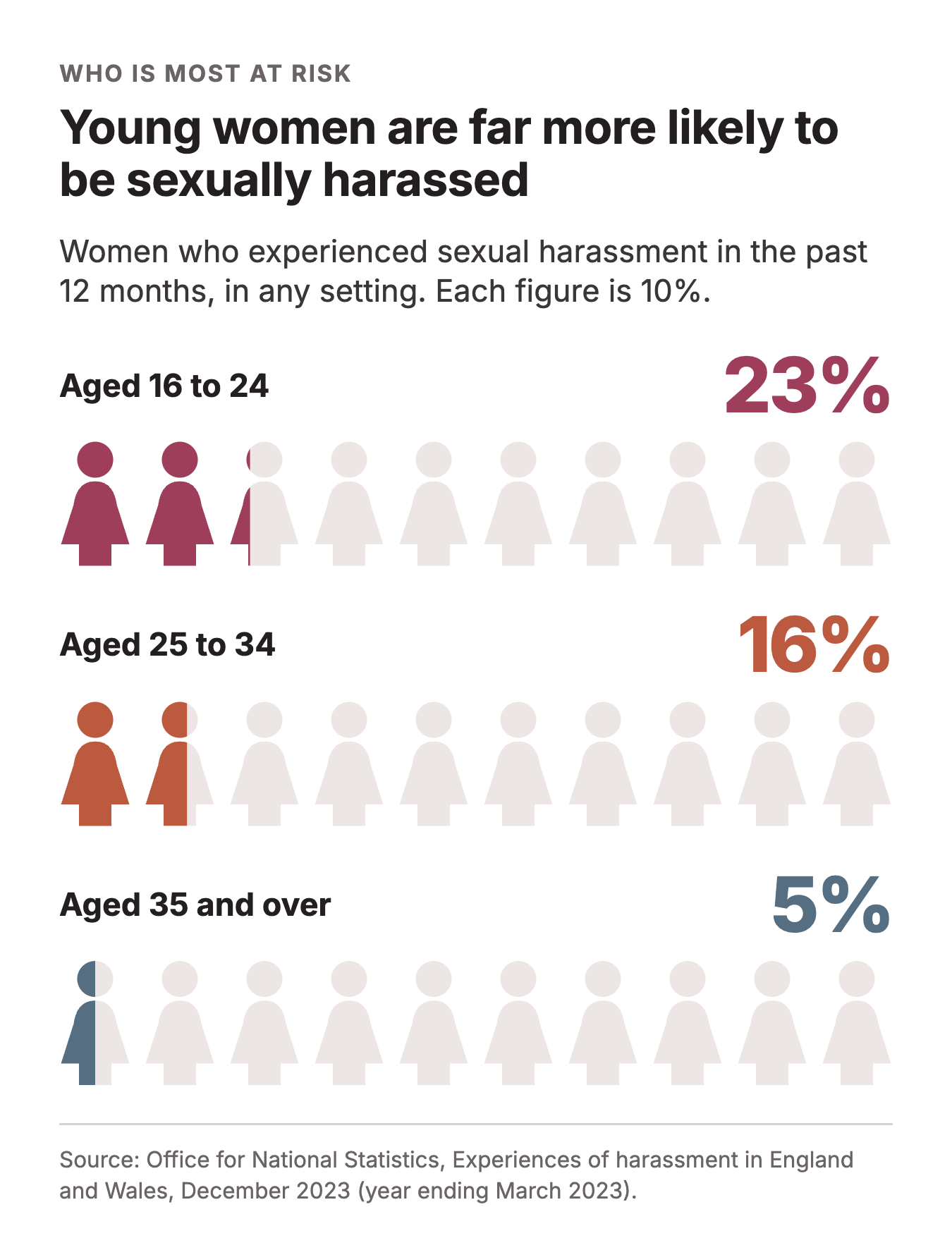
Young women are far more likely to be sexually harassed. In the Office for National Statistics' Experiences of harassment in England and Wales, published in December 2023 for the year ending March 2023, 23 per cent of women aged 16 to 24 had experienced sexual harassment in the past 12 months, in any setting.
The figure was 16 per cent for women aged 25 to 34, and 5 per cent for women aged 35 and over.